
RFID Food Reservation Terminal
A Raspberry Pi terminal that retrieves daily reservation data, checks RFID cards and guides the operator through meal-distribution states.
Python application development and embedded integration
My contribution
Python application development and embedded integration
My work covered Python/Tkinter application development and embedded integration for reservation checks, RFID input and operator feedback.
Delivered scope
An embedded meal-reservation workflow with original hardware imagery, four interface states and a running-system demonstration.
What stands out.
- Scheduled reservation-list retrieval
- RFID-based reservation checking
- Valid, missing, delivered & closed states
From the problem to the implementation.
The problem
Connect a daily reservation list to the physical collection point and distinguish eligible, unreserved and repeated collection attempts.
The approach
- Received the daily reservation list automatically from a server.
- Used RFID cards to identify the reservation at the terminal.
- Built a Tkinter interface for reservation and meal-distribution states.
Result & scope
An embedded meal-reservation workflow with original hardware imagery, four interface states and a running-system demonstration.
Implementation choices and demonstrated scope.
Engineering decisions
The terminal retrieves a daily reservation list from a server at a scheduled time and checks RF01D card identifiers against reservation and prior-collection states. Tkinter distinguishes valid, unreserved, already-delivered and completed-distribution states on the Raspberry Pi.
Validation & evidence
Original interface and circuit photographs accompany a terminal demonstration and a bench recording with several card and status changes. Personal details are masked in the bench recording. These demonstrate the workflow; no throughput, deployment count or long-duration service-reliability measurement is supplied.
Explore 3 project images and 2 archival recordings, with captions identifying the hardware, interface or prototype shown.
Inside the project
3 images
 Enlarge imageEnlarge image
 Enlarge image
See it in action
RFID meal-distribution terminal
Food-reservation terminal demonstration. Silent demonstration.
Open videoRFID terminal · complete bench workflow
A bench recording of the RFID meal-distribution terminal through several card and status changes. Personal details are masked; silent playback.
Open videoHow the system works
Select a block to explore its role.
A guided illustration of the system components.
Reservation server
The daily reservation list is retrieved at a scheduled time.
RFID card
The reader supplies a user/card identifier.
Reservation check
The application checks the identifier against the loaded list and prior collection state.
Operator feedback
Tkinter displays reserved, unreserved, delivered or completed states.
Distribution workflow
The terminal manages the configured meal-distribution period.
The detail behind the build
From the daily list to the service point
The terminal retrieves reservation data from a web server at a scheduled time and starts the distribution workflow during configured periods. RFID cards let users check their reservation at the Raspberry Pi device.
An interface for the situations that matter
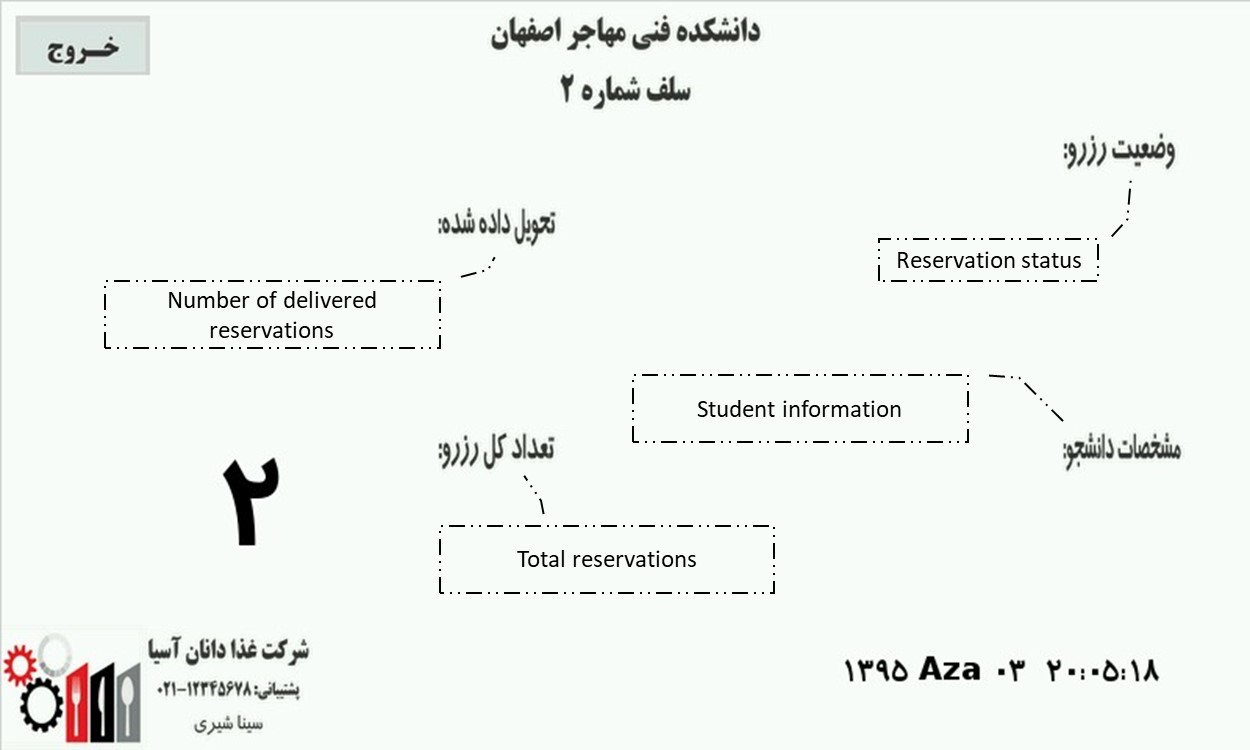
The Tkinter application distinguishes a valid reservation, no reservation, an already delivered meal and the end of distribution. These states give the operator immediate context at the collection point.
Connecting software and the reader
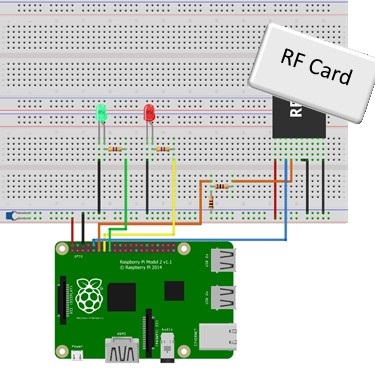
Python implements the application, with serial communication for the RF01D reader and GPIO for embedded integration. The hardware comprises a Raspberry Pi, the card reader and a custom single-layer PCB.
Original implementation views
The project media covers the main window, the circuit and RFID card, the completion state and a recording of the system running.
Software, hardware & tools.
Software
- Python terminal application
- RFID integration & reservation handling
Hardware
- Raspberry Pi
- RF01D reader
- RFID cards
- Single-layer PCB
Technology stack
- Embedded systems
- RFID integration
- Operator interfaces
Working on a related challenge?
Get in touch about Python, embedded systems or a research opportunity.
Two-Line Caller ID
Python applications