Offline RFID Attendance
An embedded attendance application designed for workplaces that need local operation without a continuous network connection.
Python application development and hardware integration
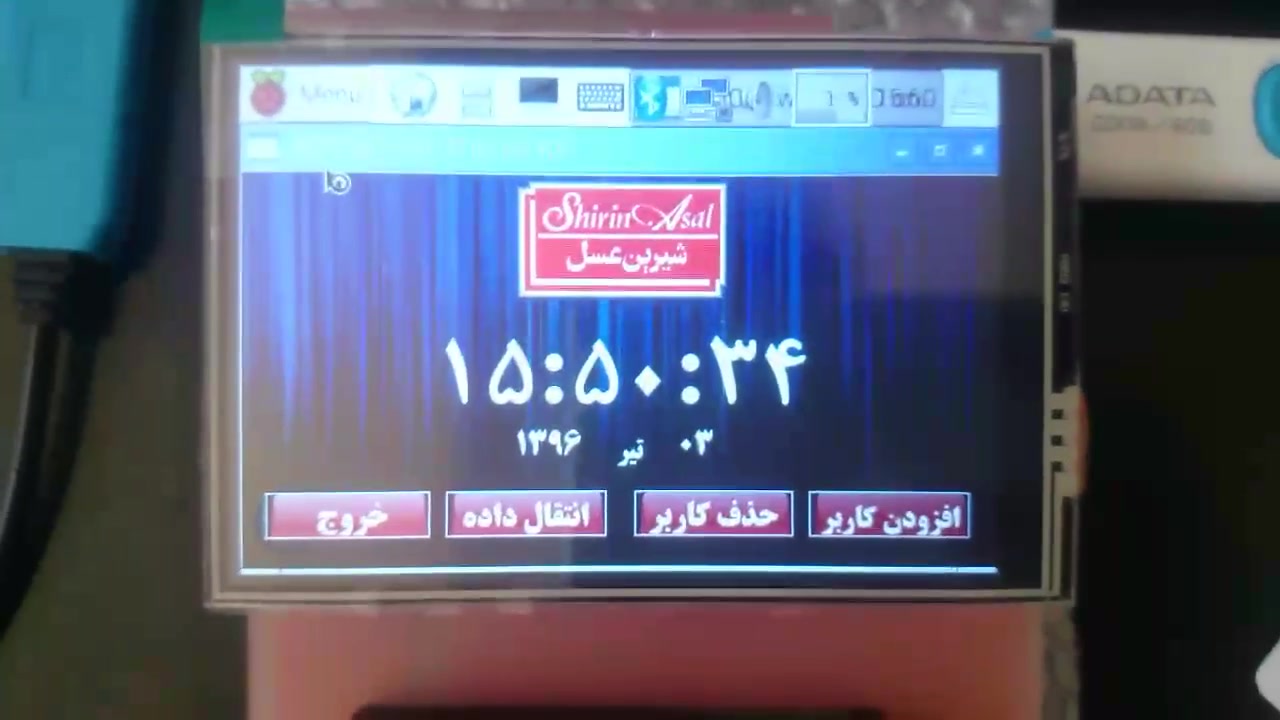
What stands out.
- Fully local check-in & check-out
- Real-time clock at device startup
- USB import & export workflow
From the problem to the implementation.
The problem
Attendance events must remain usable when internet access or a local server is unavailable.
The approach
- Integrated RFID and serial workflows with a Raspberry Pi application.
- Built a Tkinter interface for attendance interactions.
- Designed around local timekeeping, employee updates and spreadsheet export through USB storage.
What came together
An offline attendance workflow bringing card input, local records and removable-storage exchange together.
See it in action
Standalone attendance workflow
Standalone attendance-system test recording. Silent demonstration.
Open videoHow the system works
Select a block to explore its role.
A guided illustration of the system components.
RFID identification
The RF01D reader supplies the employee/card interaction.
Attendance application
Python/Tkinter handles the local workflow and check-in/check-out records.
Clock source
A DS1307 RTC synchronizes device time at boot.
Local files
Events are retained as spreadsheet data.
USB transfer
Employee data is imported and event files are exported through removable storage.
The detail behind the build
Attendance without a network dependency
The terminal records employee check-in and check-out locally, without requiring an internet connection or local server. It was developed as a custom attendance application for a food-industry setting in Tabriz.
A local source of time
A DS1307 real-time-clock module synchronizes the Raspberry Pi clock when the device starts, providing the time source for attendance records.
USB import and export
An employee list is loaded through USB. The application records attendance events in spreadsheet files, detects inserted removable storage and transfers the event files for collection.
Import employee information
Record check-in and check-out
Detect inserted storage
Export XLS event records
Embedded interaction
Python and Tkinter implement the local interface. Serial communication connects the RFID workflow, while the Raspberry Pi, RF01D reader and custom PCB form the device platform.
Software, hardware & tools.
Software
- Python attendance application
- Local records & USB transfer
Hardware
- Raspberry Pi
- Custom PCB
- RF01D RFID module
- DS1307 RTC
- USB storage
Technology stack
- Embedded systems
- Offline operation
- RFID integration
Working on a related challenge?
Get in touch about Python, embedded systems or a research opportunity.
Networked Polling Terminals
Python applications